Advancing Higher Education in Prison Through Collaboration and Technology
Reflections from the 2025 Digital Opportunities Summit
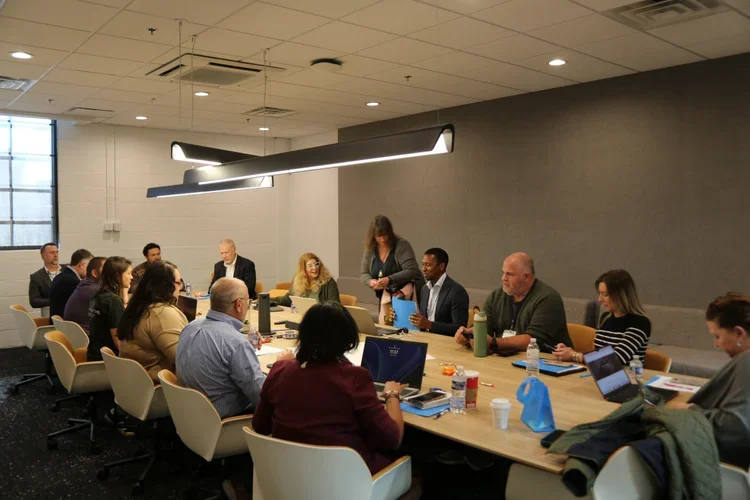
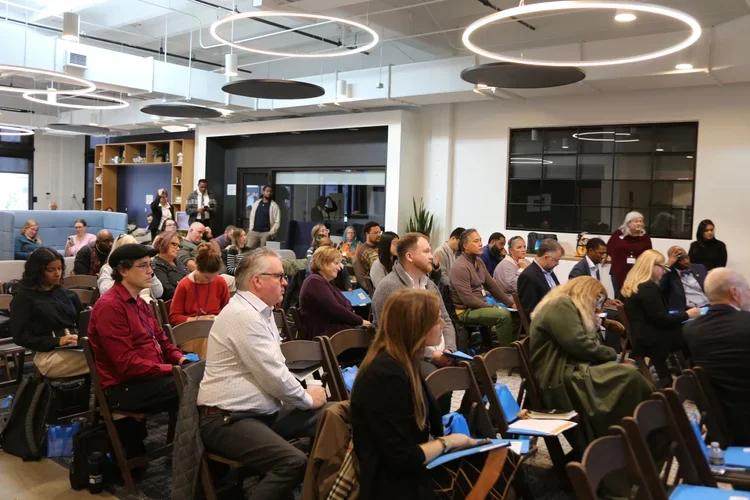
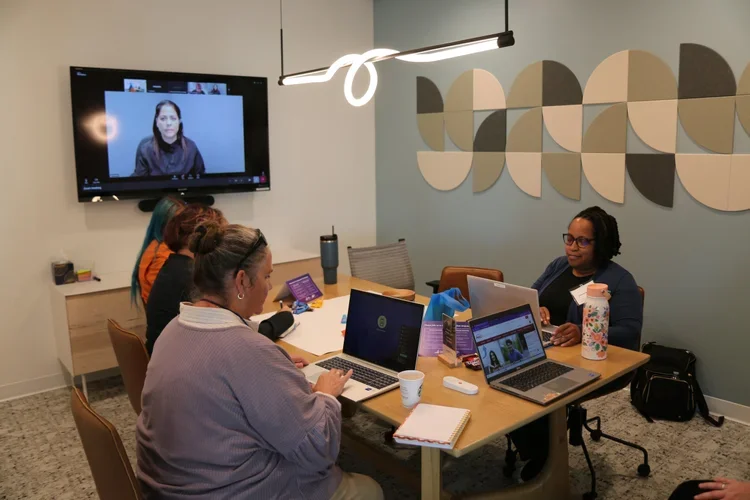
On October 31, Virginia Consensus brought together justice-impacted individuals, educators, corrections professionals, technologists and workforce development leaders for the Digital Opportunity Summit: Design Thinking on the Tech Ecosystem for Higher Education in Virginia Prisons. The day focused on a central theme: using technology to enhance education in Virginia’s prisons, advance digital literacy and support successful reentry. Through panel discussions and group working sessions, attendees explored the challenges of delivering education in correctional facilities, examined emerging technology solutions and began designing a collaborative roadmap that integrates educational, correctional and technological priorities.
The summit celebrated cross-sector collaboration, innovation and a shared commitment to ensuring that incarcerated Virginians have access to transformative, future-ready education. Here are a few key themes and insights from some of our panelists.
Technology as a Gateway to Equity and Opportunity
Zacc Allen from the Virginia Department of Corrections (VDOC) highlighted the critical role of technology in preparing incarcerated individuals for life after release.
“Digital literacy for returning citizens is essential. You cannot survive in today’s society without digital skills,” Allen said, noting VDOC’s plans to invest in broadband upgrades and tablet-based learning to bridge this gap.
Adolph Brown, PhD, College Program Coordinator at VDOC, emphasized that expanded access to digital tools and Pell-funded programs will allow students to engage more fully with coursework and better prepare for reentry into society.
Julie Little, who teaches at Rappahannock Community College and Haynesville Correctional Center, illustrated the practical challenges of education in prison.
“On a good day, everything works: PowerPoint opens, the projector functions and I can use the whiteboard. On a bad day, nothing works, and I’m teaching with just my voice and a dry-erase marker,” Little said.
Yet she emphasized the resilience of her students, describing them as “hungry for education” despite technological limitations.
Human-Centered Design and the Power of Empathy
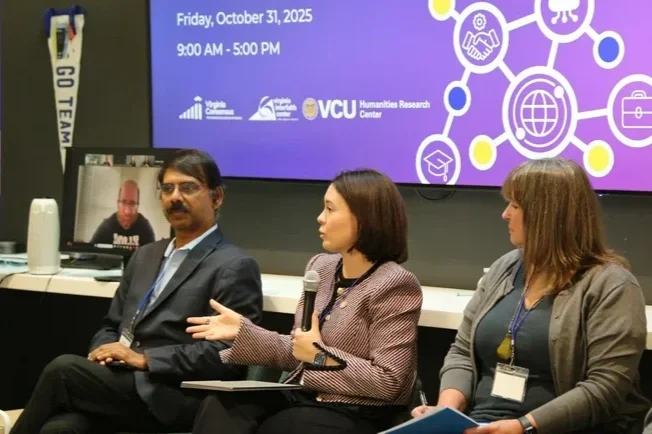
From left to right: Ben Wright, Panelist; Padhu Saisheyer, Panelist; Nicole Overley, Panelist; Julie little, Panelist
Padhu Saisheyer, PhD, a design-thinking educator from George Mason University, encouraged the summit to approach correctional education with empathy. He explained that understanding the lived experiences of students and staff is the first step toward designing solutions that work.
“Design thinking teaches that innovation begins with empathy. When we bring that empathy into prisons, we don’t just create data — we create pathways to dignity, opportunity and transformation,” Saisheyer said.
This focus on human-centered design carried through the working groups, where attendees identified the most pressing challenges, explored potential solutions from technology providers and higher education institutions and brainstormed concepts for a strategic roadmap that integrates educational, correctional and technological considerations.
Nicole Overley, Commissioner at Virginia Works highlighted workforce development as inseparable from education. Programs that combine skill-building, technical training and reentry support equip individuals not just to find jobs, but to thrive in their communities.
The Humanities and Transformative Learning
Cristina Stanciu, PhD, representing the Humanities Research Center at VCU reminded attendees that education in prisons is about more than vocational skills. Humanities courses cultivate empathy, critical thinking and self-reflection — qualities essential for personal growth and successful reintegration.
“Education becomes a pathway not just to employment but to citizenship and connection,” Stanciu said, emphasizing the broader societal benefits of well-rounded correctional education.
Voices of Lived Experience
Kelly Dara, formerly incarcerated and now pursuing a master’s degree at Syracuse University Online, offered a powerful perspective on the student experience. She described the painstaking logistics of completing research projects and submitting papers without Internet access or standard classroom tools.
“Education behind those walls isn’t just about learning — it’s about hope. It’s about being seen as more than a number,” Dara said, underscoring the human stakes of this work.
The summit made clear that Virginia stands at a pivotal moment. By combining investment in technology, a human-centered approach to design and a commitment to equity and collaboration, the Commonwealth has the opportunity to lead in correctional education.
As Zacc Allen noted, “Education and programming remain central to our mission. Ninety-five percent of incarcerated Virginians will return to their communities, and education is the key to successful reentry.”
The 2025 Digital Opportunity Summit was a celebration of progress, partnership and possibility. The conversations, insights and commitments shared during the event are laying the foundation for a more inclusive and innovative higher education ecosystem in Virginia’s correctional facilities — one that equips students to learn, grow and succeed long after they leave prison walls.