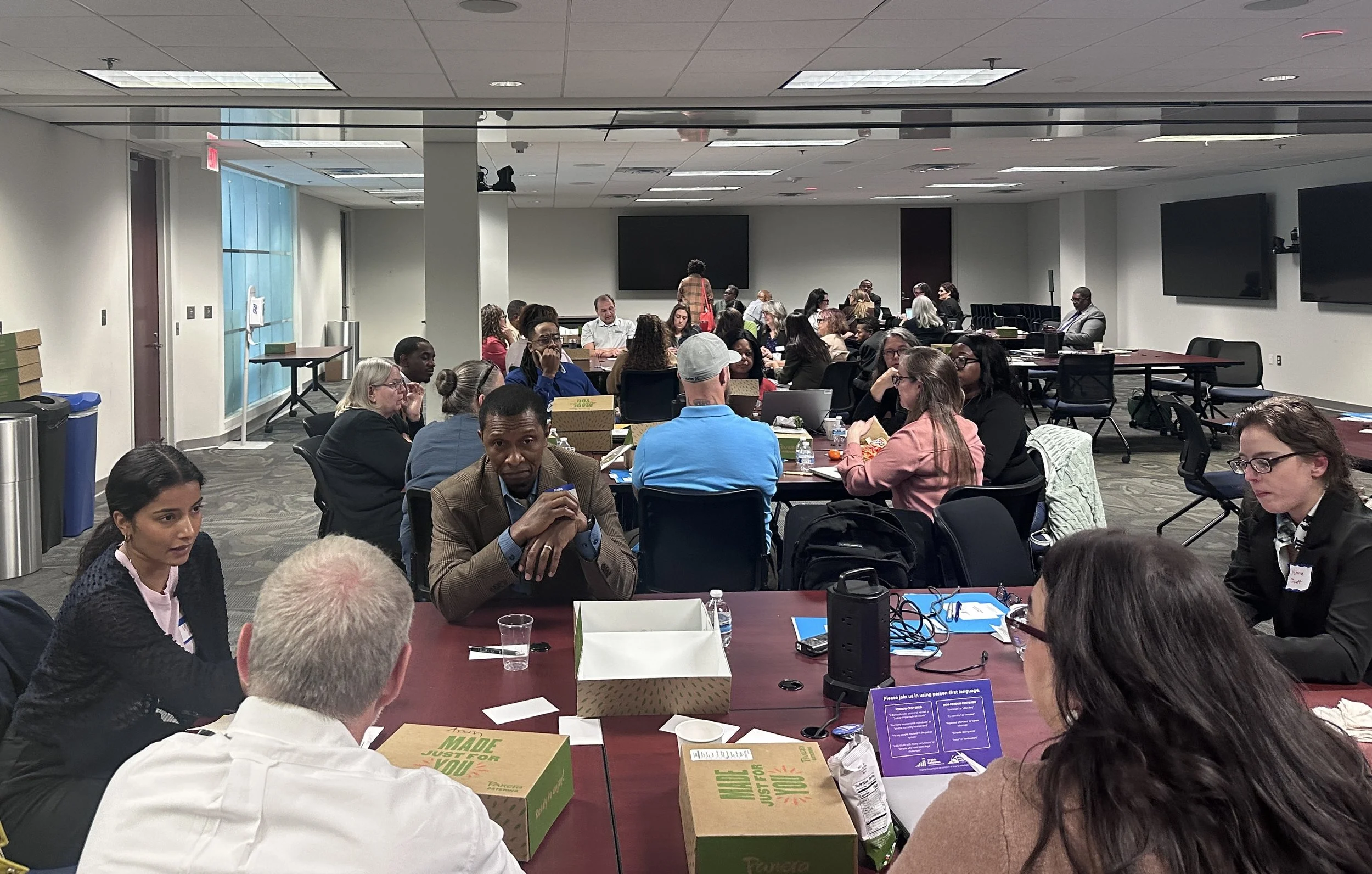
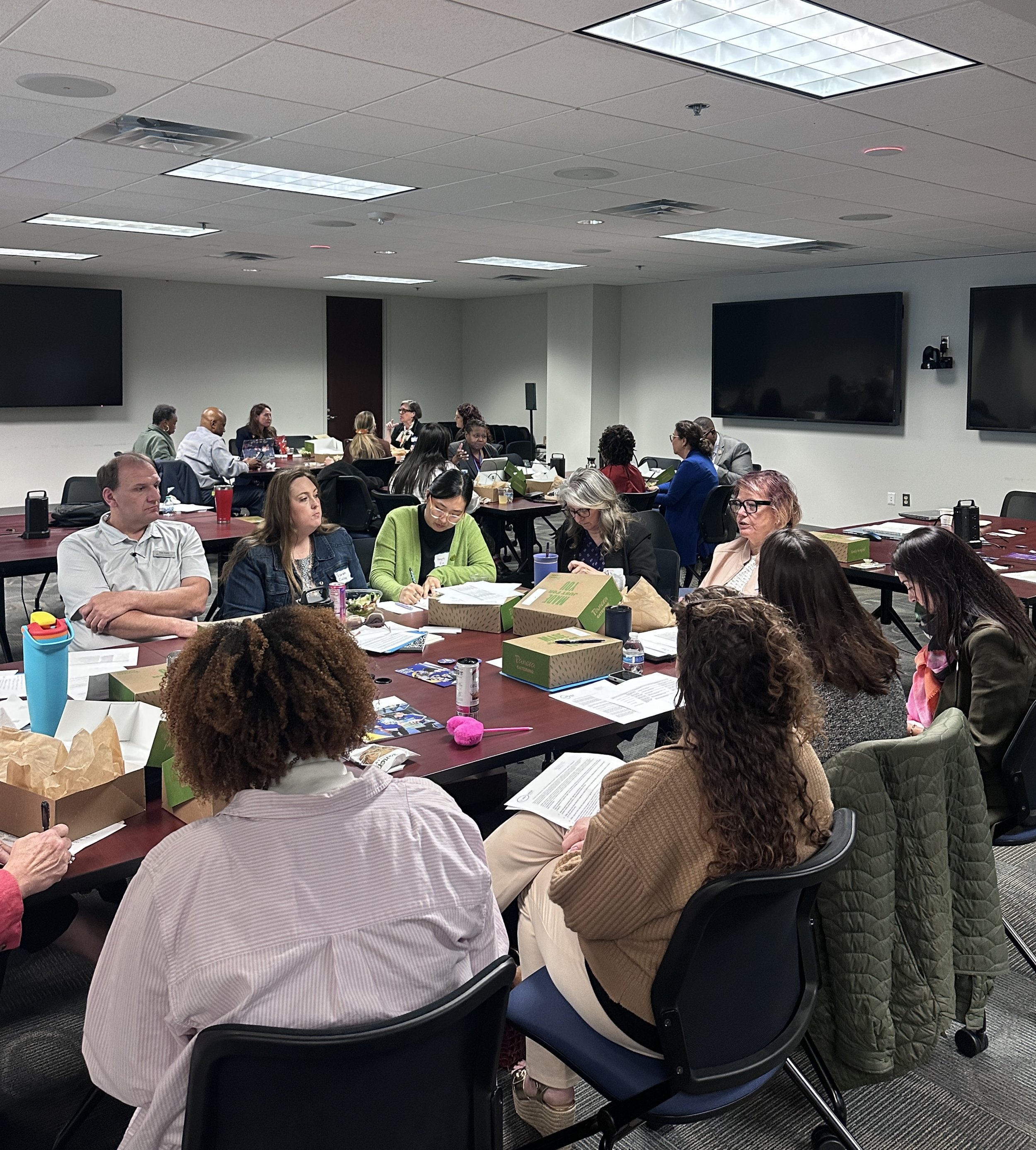
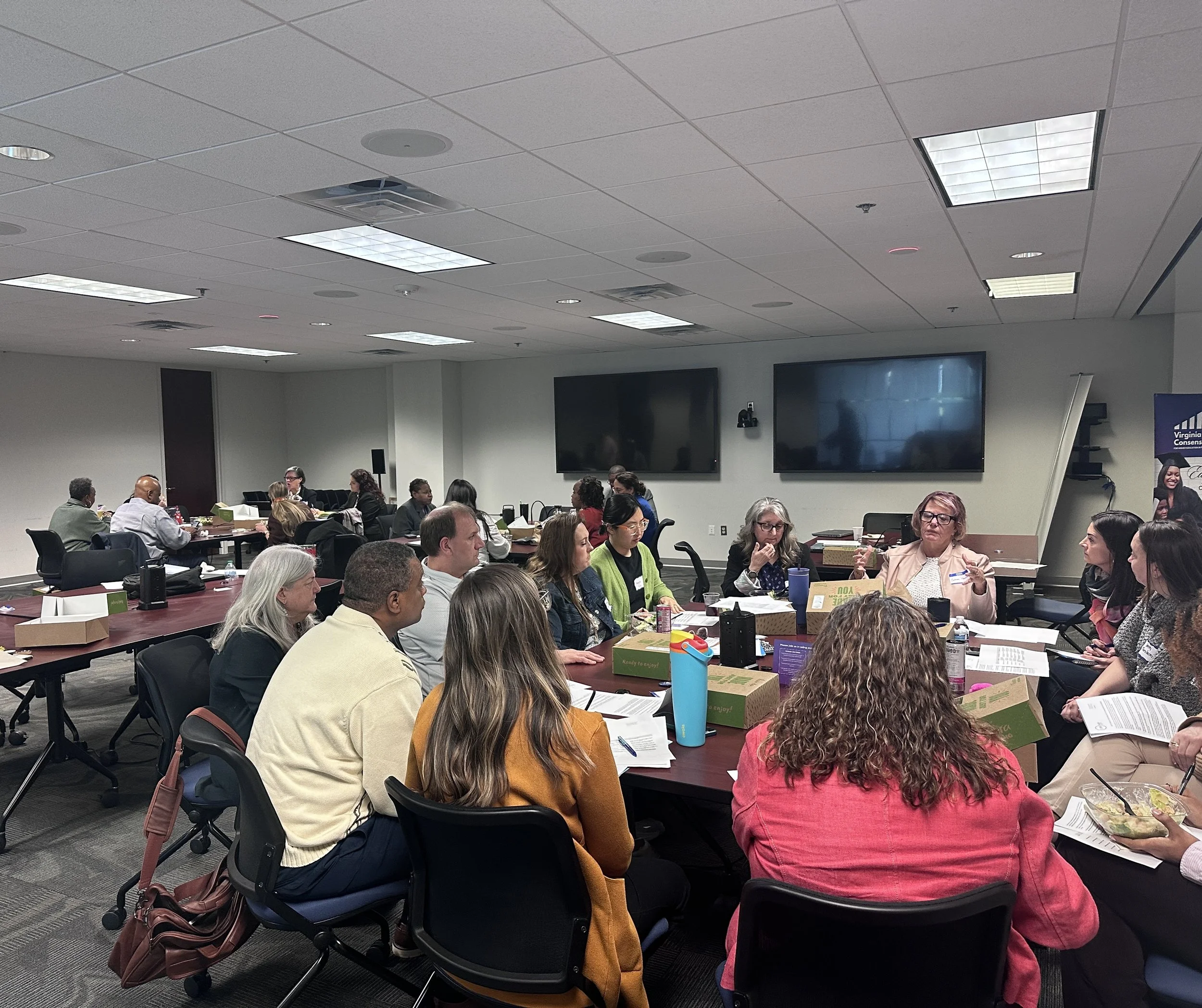
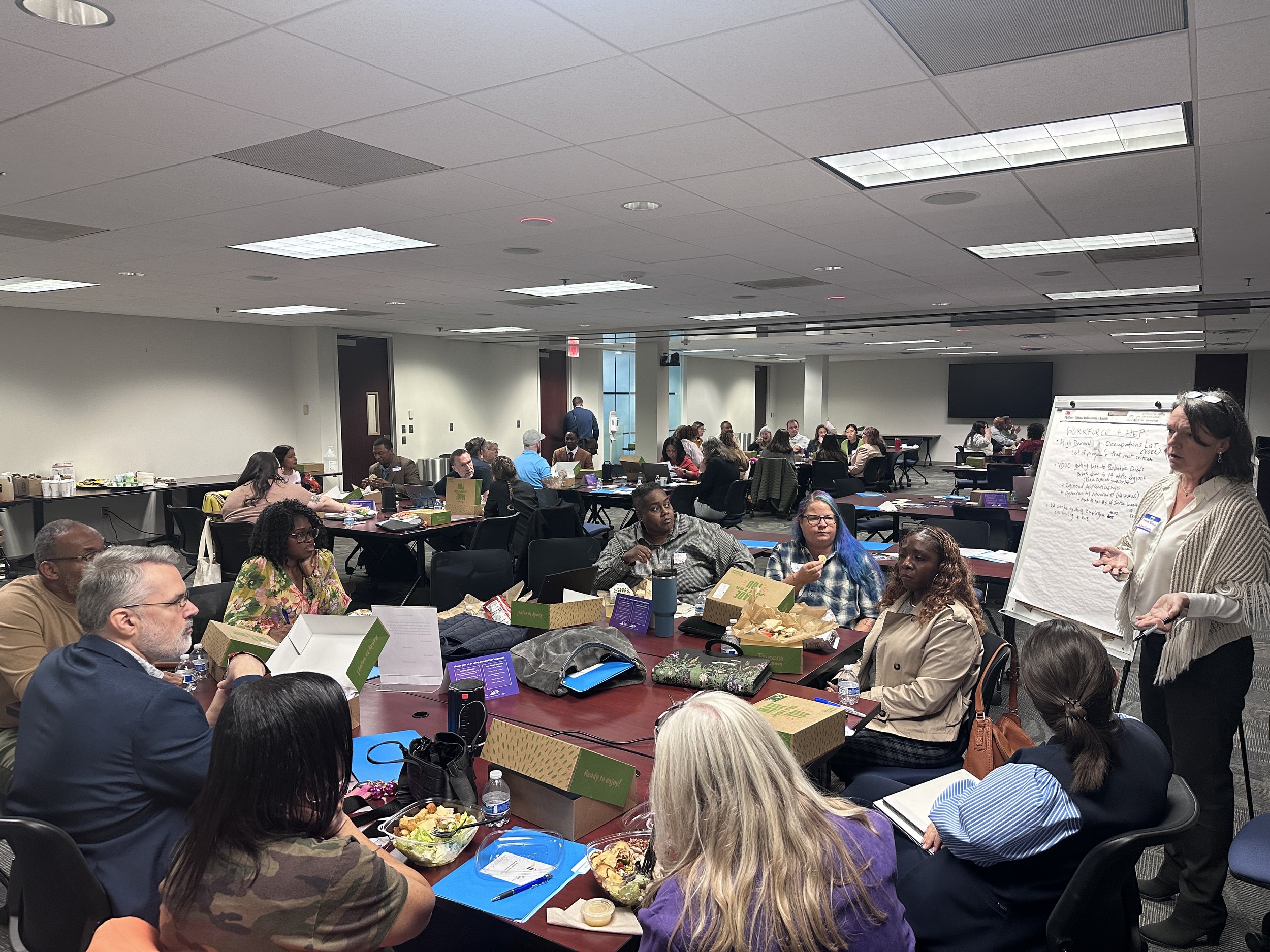
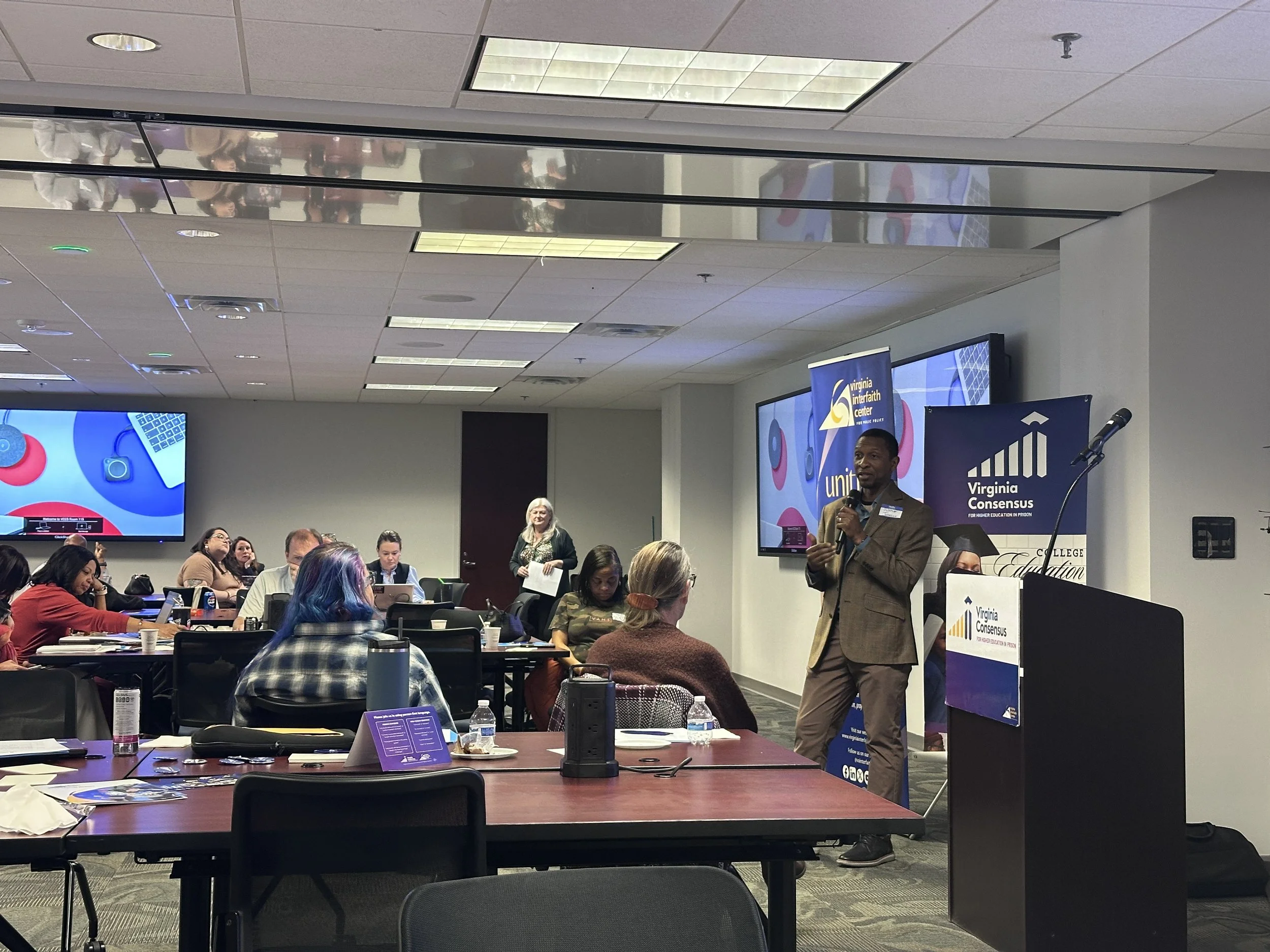
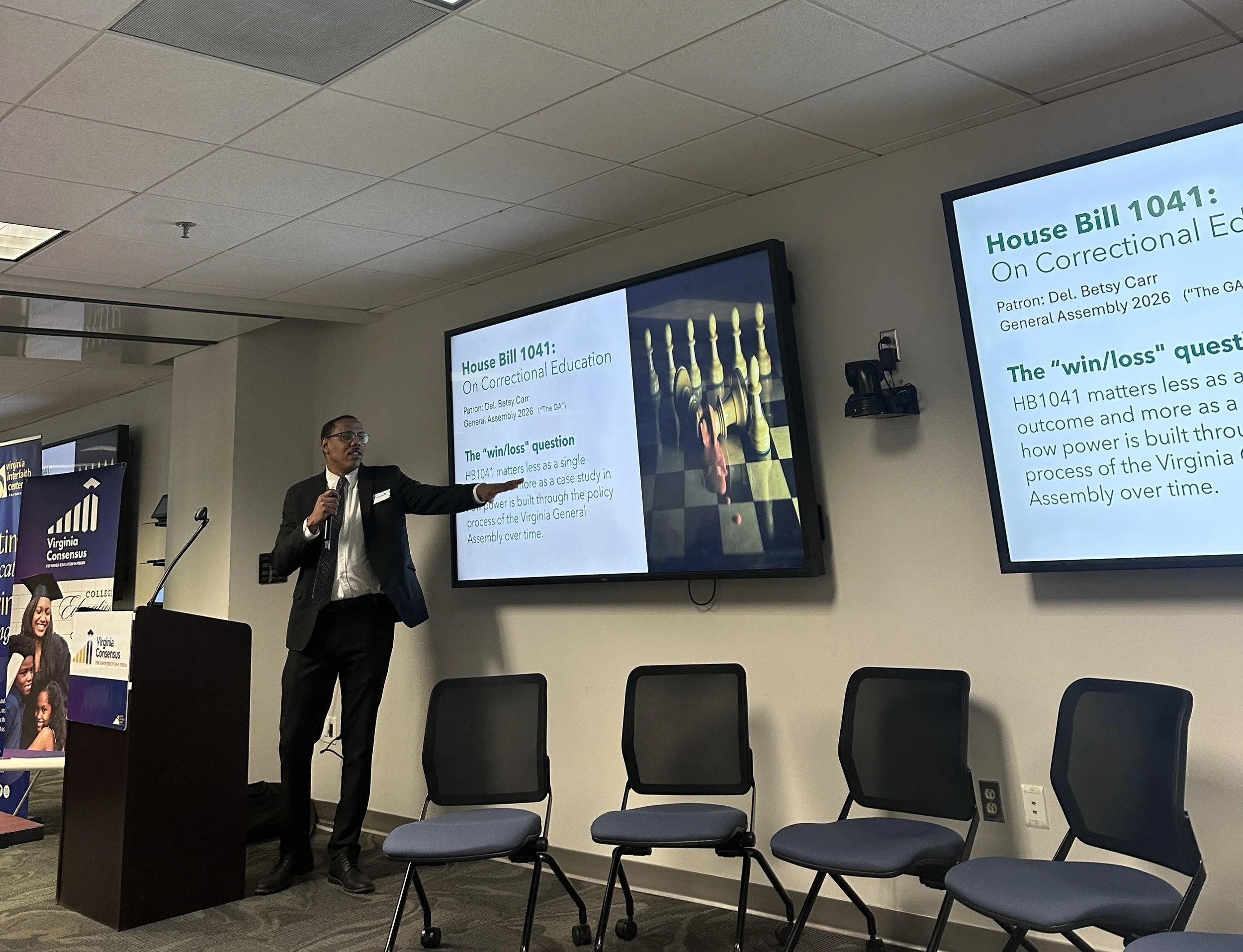
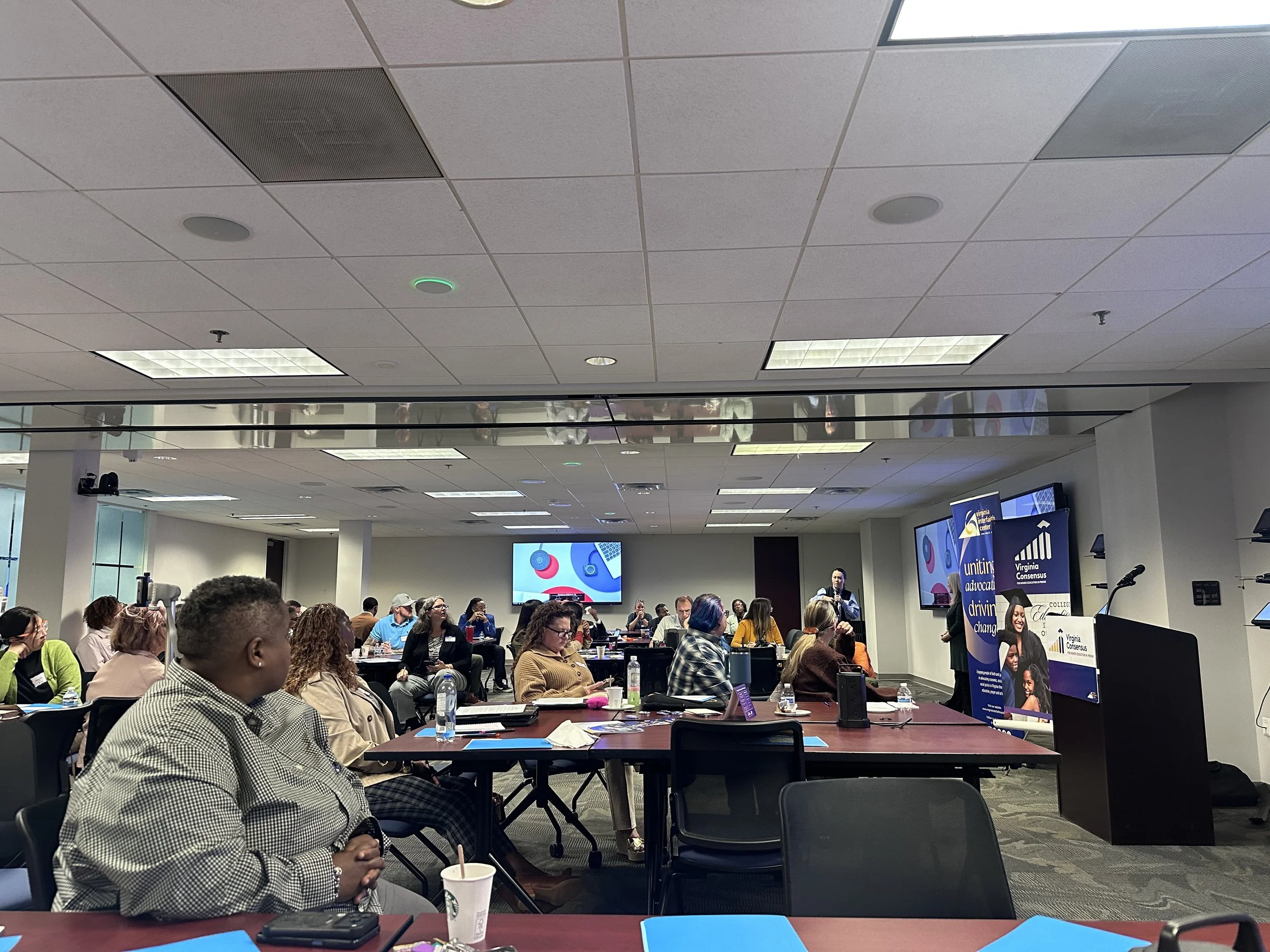
On March 30, 2026, the Virginia Community College System Office hosted the second Meeting of the Whole, a gathering of leaders from higher education, the Department of Corrections, workforce development and government, alongside faith-based and justice-impacted advocacy groups. This session advances a statewide strategic plan aimed at broadening access to high-quality educational opportunities within Virginia’s correctional facilities.
Remarks came from a variety of individuals from within and outside of the commonwealth, with sessions structured around three key themes:
Theme 1: Informed By Firsthand Experience; Looking Backward to Move Ahead
The transition from pilot to full-scale implementation requires a deliberate, strategic pause to evaluate operational outcomes and refine system architecture. Drawing from the Second Chance Pell experience, without intentional reflection, the friction points and inefficiencies inherent in an experimental phase are often inadvertently codified into the permanent model. To ensure institutional scalability and long-term success, organizations must prioritize a rigorous "look-back" period, allowing for the decoupling of failed pilot elements before they are amplified during a broader rollout.
What we learned from the Second Chance Pell Experiment (2015-2023)
Eric Barna, PhD, Former Vice President of Instruction, Rappahannock CommunityCollege — Moderated and shared insights from one of Virginia’s inaugural Second Chance Pell sites, focusing on the implementation of associate degree programs within the correctional system.
Douglas Caroll, Graduate, Rappahannock Community College — Provided a firsthand account of earning a degree while incarcerated and the subsequent impact on reentry, highlighting how higher education facilitates the breaking of generational cycles and the expansion of perceived possibilities.
Julie Olive, Prison Education Coordinator, Piedmont Virginia Community College — Emphasized the central role of strategic relationship management and cross-departmental collaboration, noting that the success of correctional education programs relies on intentional team building and aligning campus personalities with the unique needs of the program.
Adolph Brown, EdD, Coordinator of College Programs, VDOC — Focused on the importance of expanding academic programming with a specific emphasis on economic mobility, ensuring that curricula are both modeled off student feedback and directly aligned with post-release employment opportunities. Emphasized that all stakeholders — from correctional leadership to instructional faculty — must maintain operational alignment.
“If our industry [academia] is really interested in advancing knowledge, then we will be able to convince the people who lead our colleges that incarcerated individuals are not a special population for us to have a special project for; they are an integral part of our commonwealth that we are made worse for not including in our conversations about academia, business, and government.” - Julie Olive
When you start from here, can you get to there? A teacher and student story
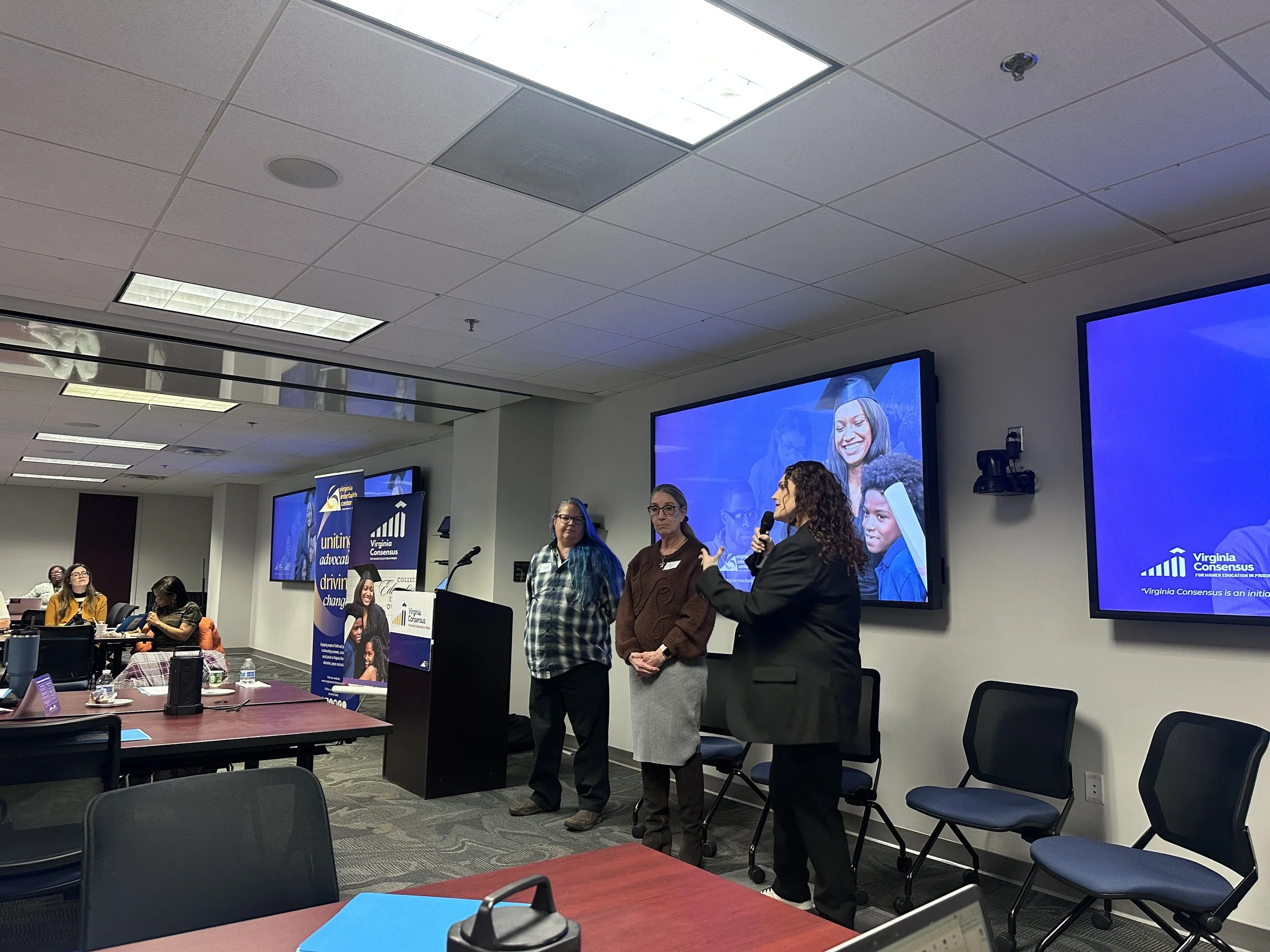
Elizabeth Shatswell, Consultant — Highlighted the role of human-centered pedagogy in transforming the classroom from a space of conflict to one of belonging. She underscored how one-to-one interaction can bridge the gap between perceived limitations and the actualization of academic potential.
Geraldine Hayden, Teacher, Fluvanna — Advocated for a holistic approach to instruction that prioritizes empathetic connection alongside academic rigor, emphasizing that fostering self-worth and optimism is foundational to the learning process and a primary driver of student success.
Steph Cull, Virginia Commonwealth University — Detailed the transformative power of empathetic instruction, illustrating how being recognized as a person of value powered her trajectory from student to educator and PhD candidate.
“We have to address the people that we’re working with collectively and wholly; you have to teach them how to love themselves; how to be learners.” – Geraldine Hayden
Journey Maps: A tool for capturing lived experience for system development
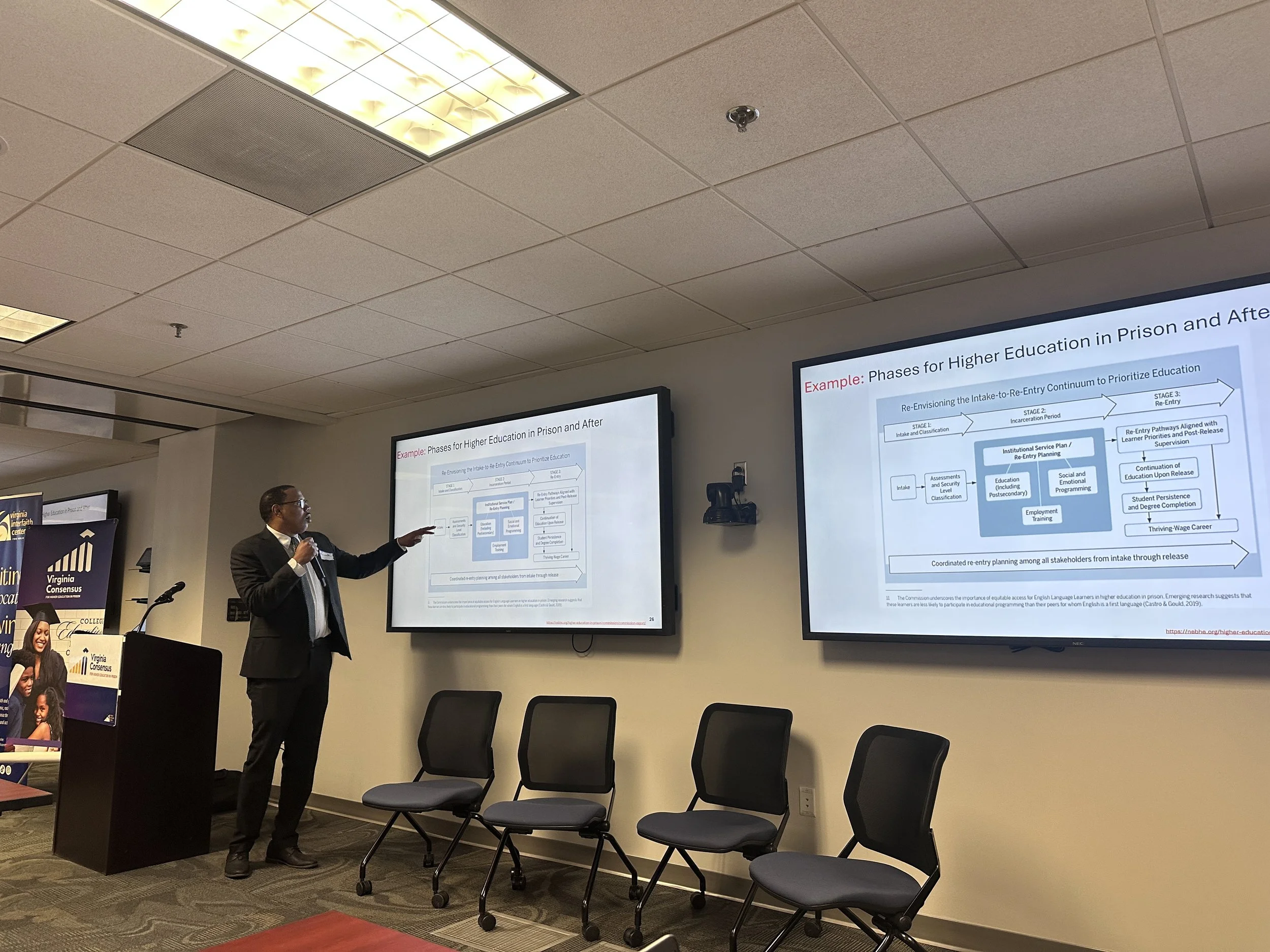
Kenneth Hunter, Virginia Consensus for Higher Education in Prison (VCHEP) — Discussed the development of journey maps for incarcerated learners, emphasizing the necessity of creating conceptual models to visualize the lived experience of impacted individuals. He noted that these maps are essential for aligning system design with user needs and leveraging those insights to identify challenges and shape more effective, person-centered policies.
Theme 2: Access for Whom? How and How Many?
Institutions and programs are increasingly moving beyond experimental phases to implement scalable frameworks that expand high-quality educational access to justice-impacted learners. Through coordinated efforts, these diverse stakeholders can dismantle systemic barriers to ensure that rigorous academic opportunities are available to the greatest number of people possible.
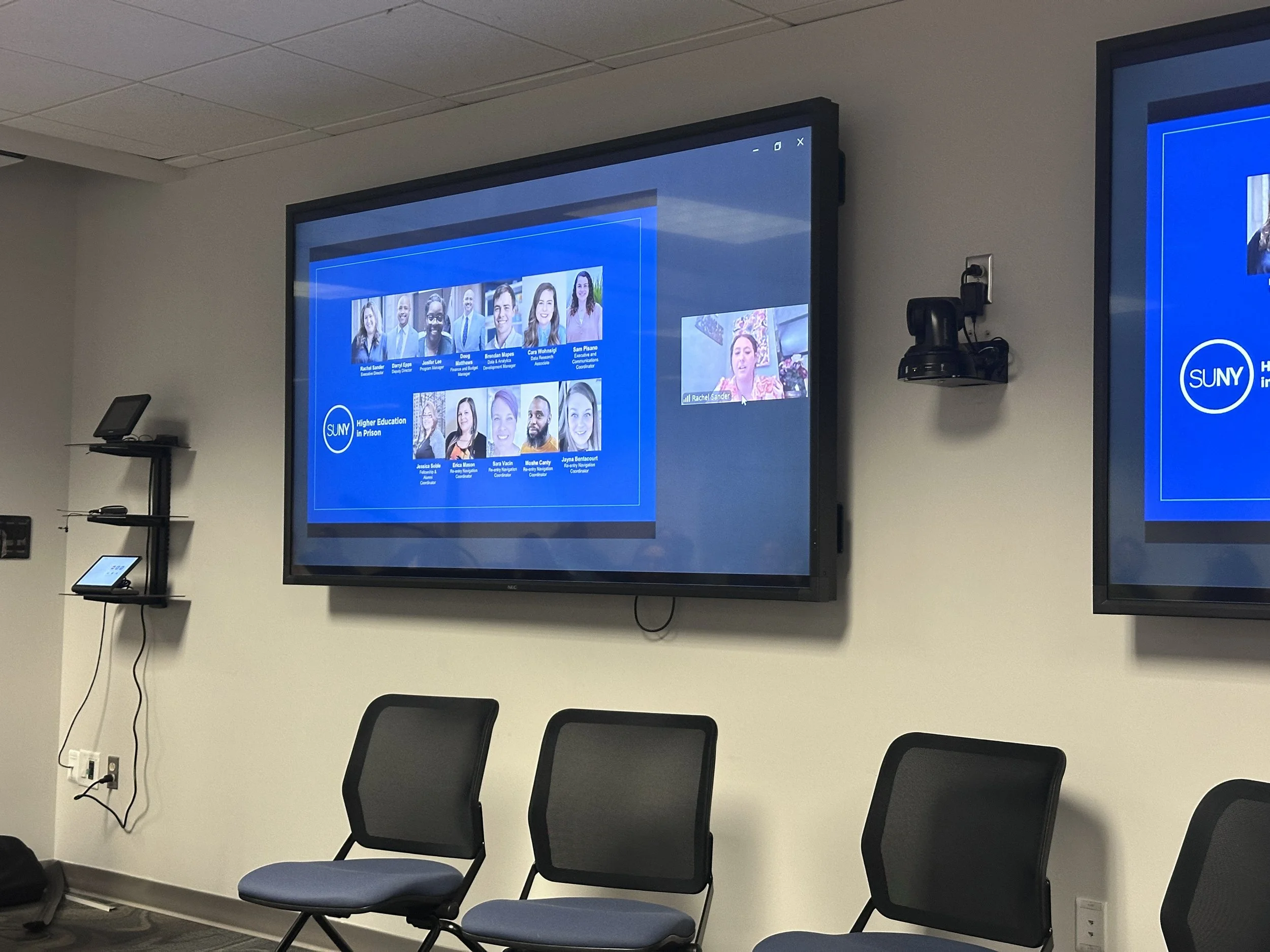
How SUNY delivers statewide college access in NY prisons
Rachel Sanders, Director of the Office of Higher Education in Prison, State University System of NY (SUNY) — Outlined SUNY’s role as New York’s primary provider of correctional education, focusing on a regionalized model that pairs campuses with nearby facilities to ensure statewide geographic coverage. She detailed the system’s efforts to provide support through technical assistance, fundraising support, equity-focused grants and more, while highlighting the implementation of impact-focused strategies like standardized transfer policies, paid fellowships and academic reentry services to ensure a consistent, high-quality experience for all students across the state.
[Special Guest] The Maine Attraction: Technology-enabled access to college education, internships and remote paid employment behind bars
Victoria Scott, Strategic Initiatives Coordinator for the Educational Justice Institute, MIT — Recounted her journey from the first woman enrolled in a degree program at the Women's Center of Maine to a strategic leader in educational justice, citing Maine’s " humanized system of normalized rehabilitation " as a model for exceptional correctional education. She emphasized that Maine’s approach, which includes internet access, co-ed academic collaboration, and living-wage professional fellowships. This effectively positions students for success by allowing them to self-actualize and build the financial stability necessary for a seamless transition into the workforce.
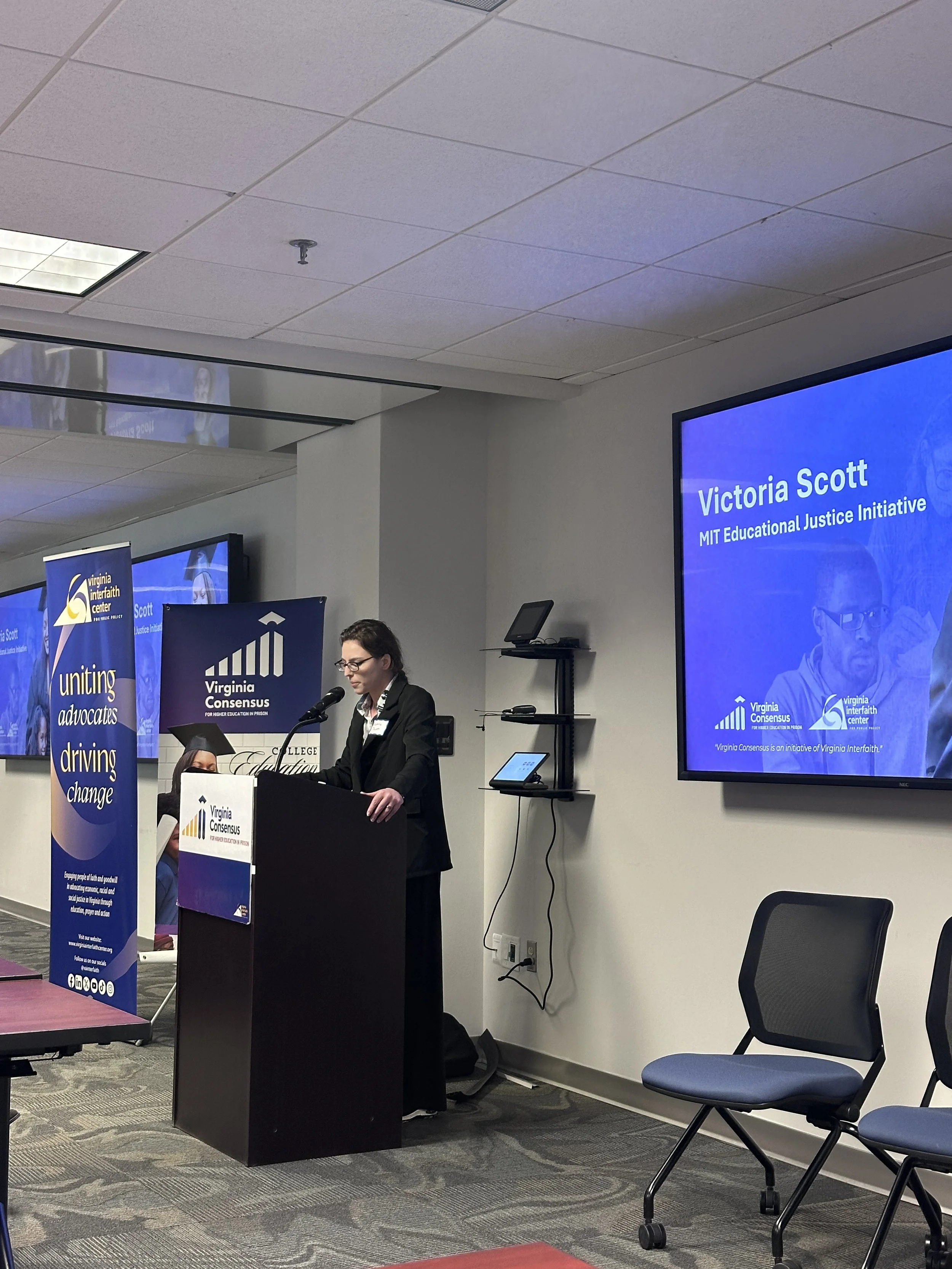
“I was able to help others around me and also support myself because the DOC was willing to build trust with me, invest in me and support me, and because I was willing to offer that same effort in their direction by supporting my peers, by championing causes and by having very difficult conversations.”
Theme 3: The Path from Education to Opportunity Doesn’t Build Itself
The development of correctional education requires a deliberate alignment between academic programming and the actualities of the modern workforce. Because justice-impacted individuals face steep systemic barriers upon reentry, the selection of degree programs cannot be arbitrary; it is an obligation to ensure that curricula provide a direct, viable pathway to economic mobility.
Introduction
Sylvester Johnson, CEO, Corporation for Public Interest Technology —Introduced the final theme, emphasizing the critical intersection of higher education and workforce development and advocating for the creation of "on-ramps" that allow students to solve real-world problems while completing their studies.
The labor market for people with conviction histories + Virginia’s profile
Ruth Delaney, Initiative Director for Unlocking Potential, Vera Institute for Justice — Discussed the critical need to bridge the gap between prison-based postsecondary education and the labor market, focusing on ensuring a "return on investment" that leads to higher earnings for justice-impacted individuals. She highlighted how a tightening labor market and the increasing demand for advanced credentials make it essential to align educational programming with high-growth industries to ensure long-term economic mobility.
Virginia’s high demand occupations dashboard
Katrina Hamilton, Research and Data Analyst, Virginia Office of Education Economics (VOEE) — Introduced a data-driven dashboard that maps educational credentials to real-world labor demand, providing students and support organizations with a strategic roadmap to ensure prison-based degrees translate directly into high-growth career opportunities within Virginia’s workforce.
On the resilient professional community & 33Percent: An AI chatbot for jobseekers with justice involvement
Allison Kroboth, Product Manager, Resilience Education — Discussed the Resilient Professional Community (RPC), a national network of over 700 members that provides business education, mentorship, and reentry support to both formerly and non-formerly incarcerated individuals. She highlighted how the RPC leverages organic peer support and research tools to help students navigate professional barriers and scale high-quality support systems across institutional partnerships.
"We actually have the tools to help higher education in prison programs not only stay connected with their students but provide them a national network of support that they wouldn't be able to provide otherwise."
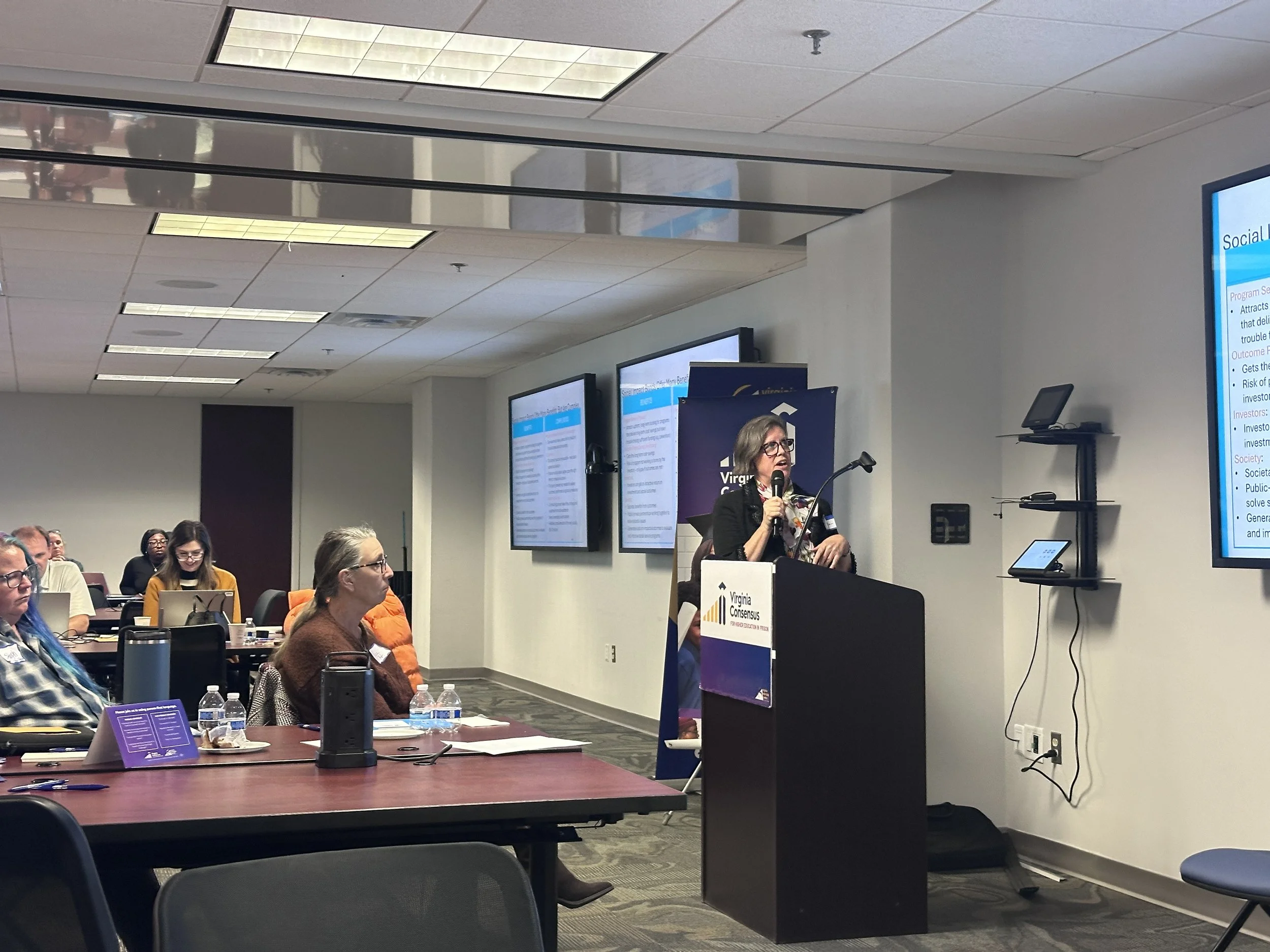
Social impact bonds: A finance innovation that wagers on the public good
Brenda Huneycutt, volunteer, Virginia Consensus for Higher Education in Prison (VCHEP) — Proposed exploring Social Impact Bonds as an innovative funding model to ensure the long-term sustainability of prison education. This approach utilizes upfront private investment that is only reimbursed by the government or private sector once measurable outcomes, such as successful workforce reentry, are independently verified.
Working Groups Breakout Sessions
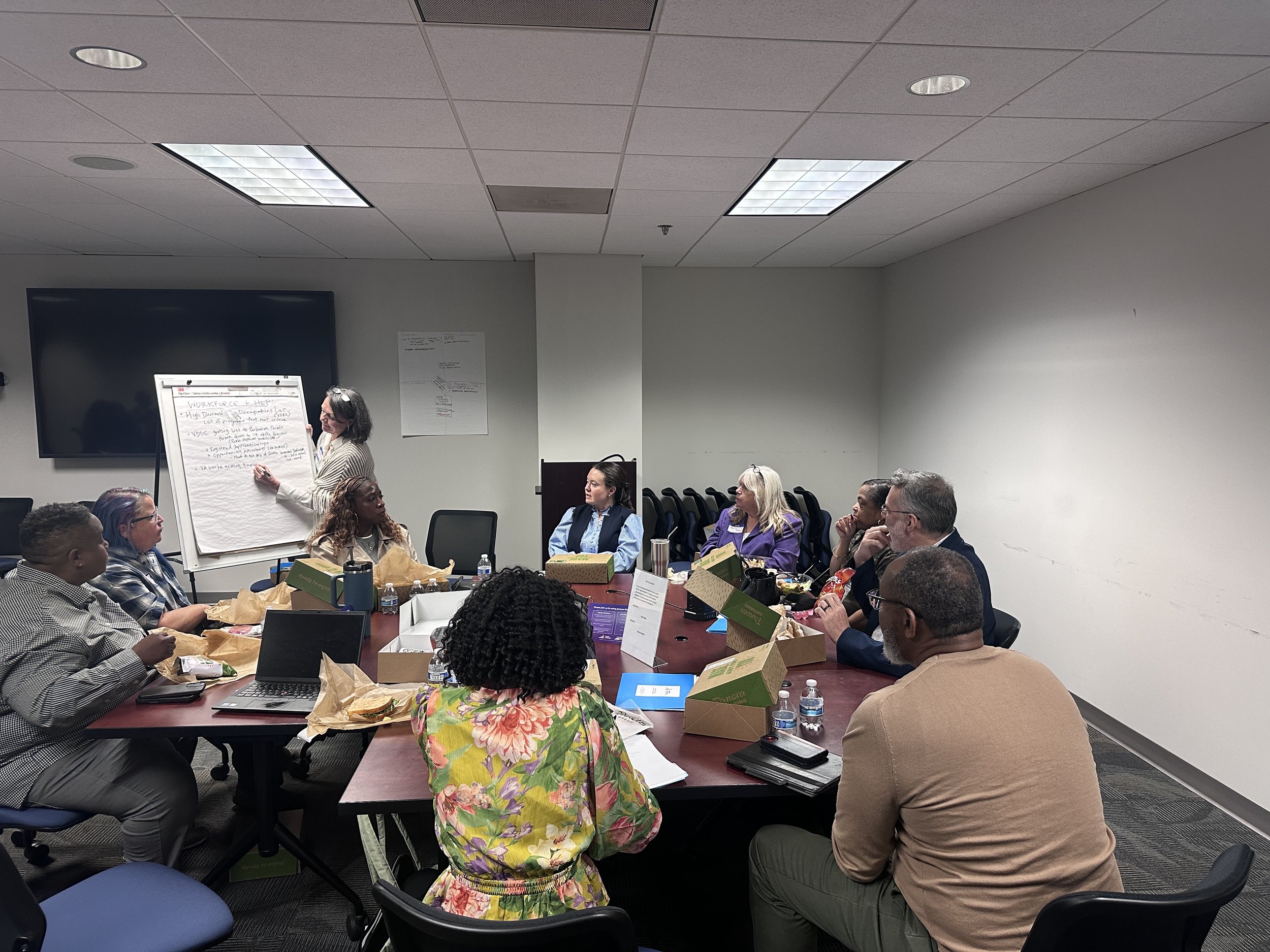
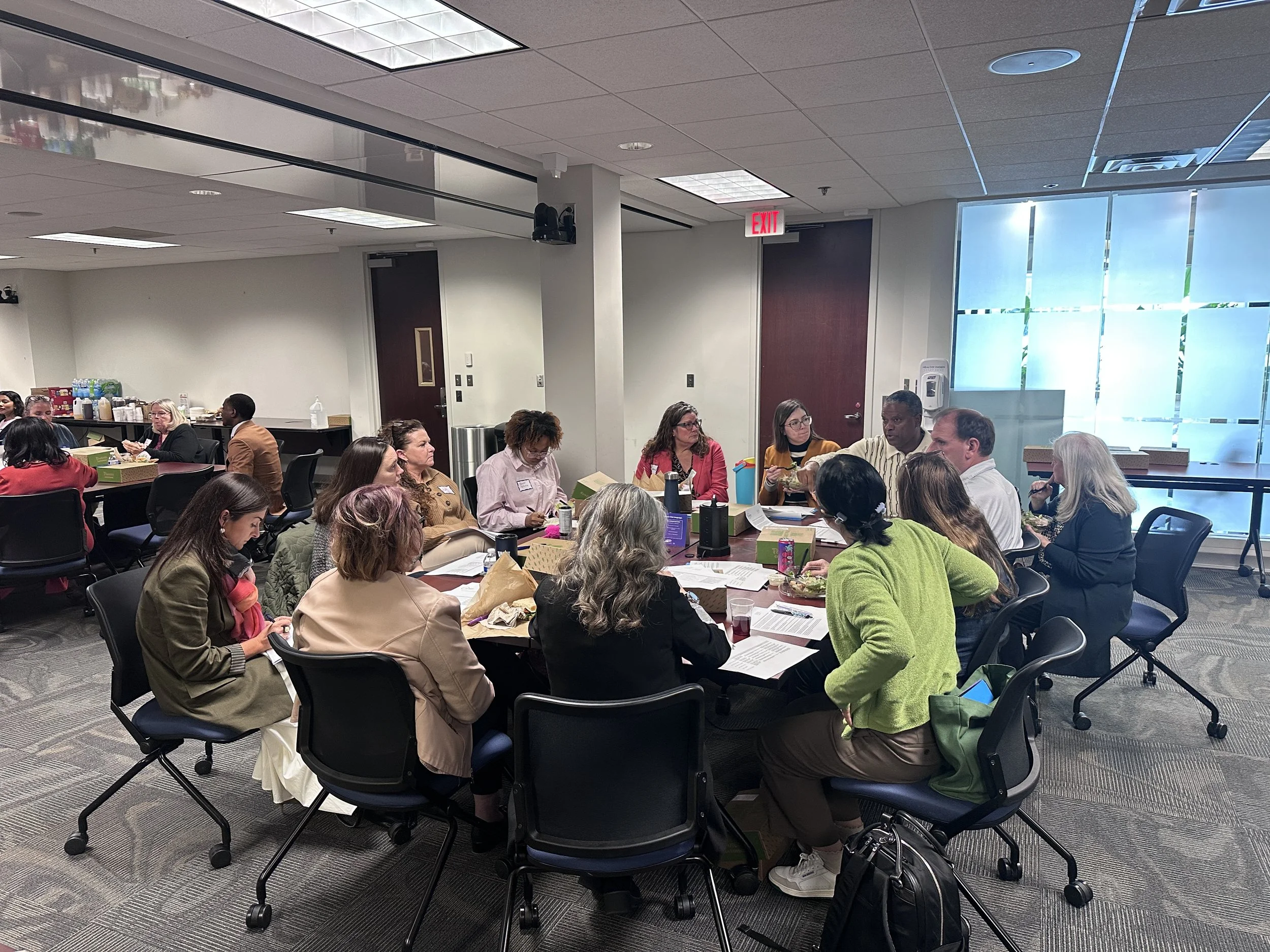
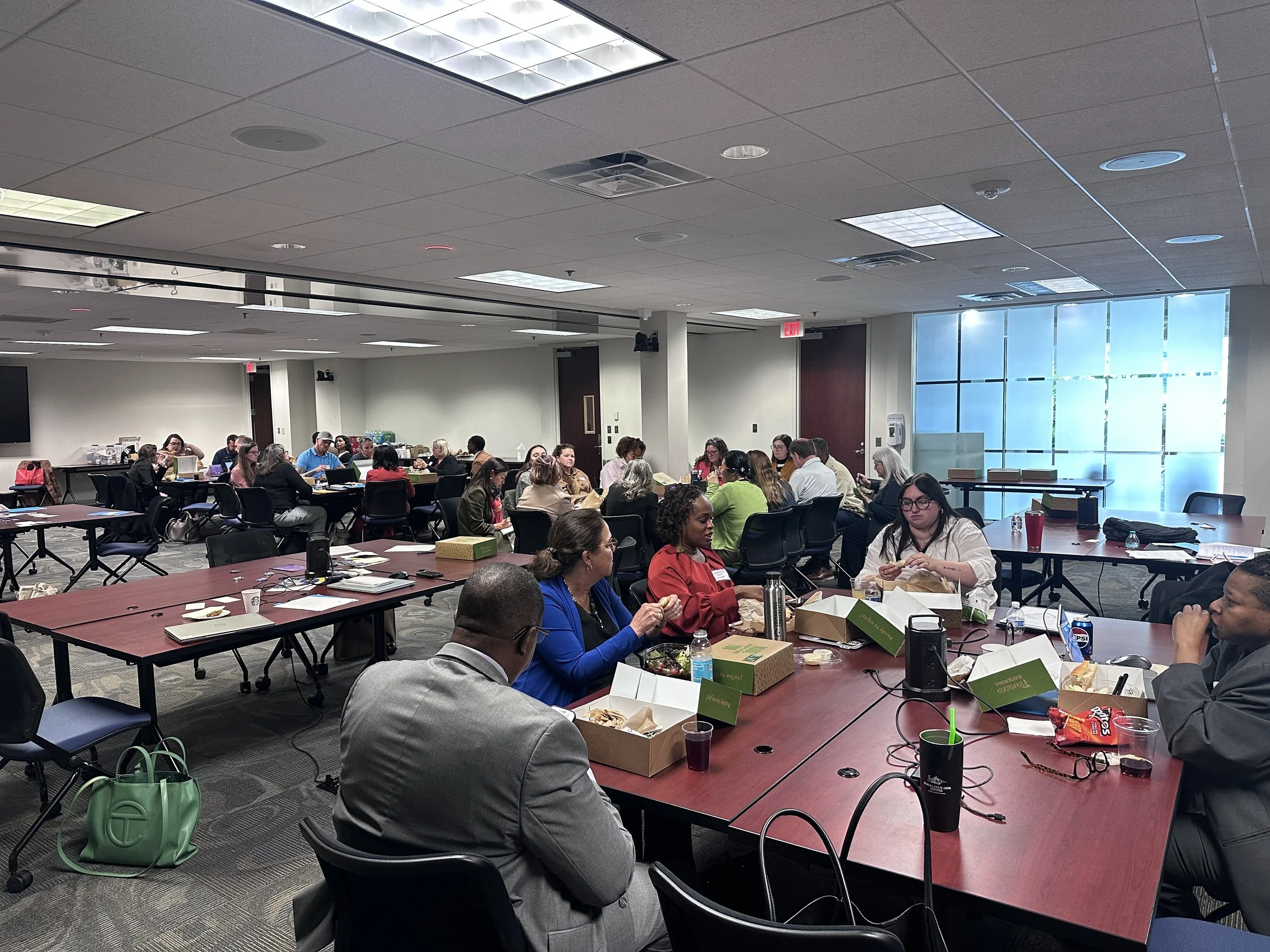
The convening transitioned into a collaborative working lunch where participants divided into Working Groups to brainstorm actionable strategies for aligning prison education with Virginia’s workforce needs and long-term financial sustainability. the groups reconvened to share the following proposed next steps and approaches:
Working Group: Sustainability
The Sustainability team homed in on ensuring long-term program viability by integrating CTE and higher education into a unified student journey map. Key next steps include:
Establishing "readiness boot camps" for college preparation
Researching Social Impact Bonds as an innovative funding model for Virginia’s prison education programs
Working Group: Policies and Partnerships
To establish a "North Star" goal implementing high-quality educational programming in every major Virginia facility by 2030, the group proposed two immediate next steps:
Initiating a strategic meeting with SUNY to model effective data collection practices
Developing comprehensive journey maps to ensure seamless degree completion for students transitioning between facilities and into the community post-release
Working Group: Expanding Access (with Technology Subcommittee)
The Access team focused on defining equitable state-wide access, identifying the need for a central administrative body to standardize higher education across all facilities. To achieve this, the group will focus on:
Researching established models in states like Ohio and California
Exploring remote learning technologies as a primary tool for expanding educational opportunities to every corner of the state
The Technology Subcommittee proposed an operational strategy focused on designing delivery models for Virginia's maximum-security institutions, operating on the principle that solving for the most restrictive environments creates a scalable baseline for the entire system. Key initiatives include:
Leveraging the Department of Corrections' transition to high-speed broadband
Integrating remote instruction to expand reach
Exploring the use of offline AI tutors powered by small language models to provide students with immediate academic support between formal class sessions
Working Group: Employment and Workforce
This group discussed mending fragmented systems of support by bridging the gap between high-demand career data and the students who need it. Next steps and goals include:
Breaking down information silos to scale resources like the Resilient Professional Community
Expanding "inside-out" career pathways such as remote internships and work-based learning
Improving data tracking for the untapped talent pool of justice-impacted individuals who are no longer under state supervision but still require professional alignment
Following the Working Groups breakout session and report backs, the meeting adjourned. The third and final in-person Meeting of the Whole will take place on Wednesday, May 27, 2026.
To learn more about VCHEP’s Strategic Planning Initiative, visit vchep.org/events/strategic-planning-for-higher-education-in-prison-in-virginia.